 Published by Sue Johns-Chapman
Published Date 08.06.2026
Published by Sue Johns-Chapman
Published Date 08.06.2026 
Artificial intelligence in paid and performance media is equal parts exciting and complicated.
Here’s where we think things stand.
The AI upside is significant
Let’s start with what’s working, because a lot is. Automated bidding has matured considerably. Smart Bidding across Google and Microsoft, Meta’s Advantage+ campaigns, and equivalent tools across the major platforms now outperform manual approaches in many scenarios and particularly at scale. When you’re managing thousands of keywords or audience segments, the machine’s ability to process signals and adjust in real time is something a human team would take substantial additional hours to replicate.
Beyond bidding, AI is delivering real efficiency gains in creative testing, audience segmentation, budget allocation, and campaign optimisation. The time that used to go on manual adjustments is increasingly being redirected toward strategy, insight, and the kind of thinking that differentiates strong campaigns from average ones.
For clients who care about ROI (all of them) this is broadly good news. More efficiency. Faster learning cycles. Less waste.
But AI needs managing
Here’s the nuance that gets lost in a lot of AI conversation: the tools are only as good as the people running them. Automated bidding optimises toward the goal you set, which means if the goal is wrong, or the signals feeding it are poor quality, or the creative isn’t connecting, the machine will efficiently do the wrong thing at scale.
The paid and performance media specialists doing outstanding and award-winning work are the ones who understand what the AI is doing and why, and who know when to intervene, when to trust it, and when to question the data it’s working from. That expertise is evolving into something quite sophisticated.
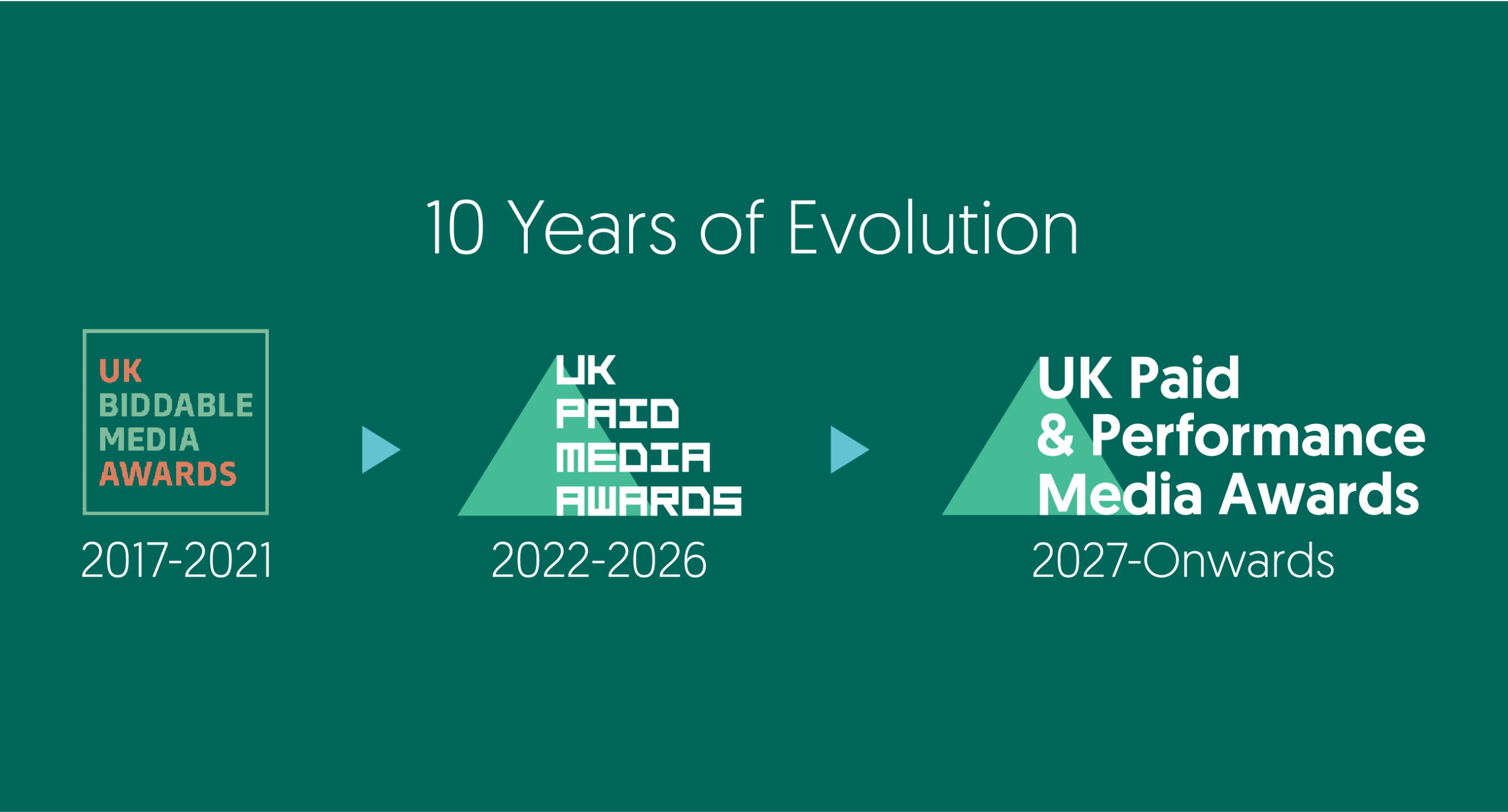
This is one of the reasons we introduced categories like Standout Paid Media Performance and Standout Social Performance in this year’s UK Paid & Performance Media Awards. We want to recognise the strategy and human judgement sitting behind the results alongside the numbers themselves.
The AI search question and why Gen Z is the market to watch
One of the most interesting tensions in paid media right now is around AI-powered search advertising. The integration of AI into search results, Google’s AI Overviews, Bing’s Copilot, and others, is changing where ads appear and how users interact with them. For some advertisers, early results are promising. For others, the picture is more complex.
Layered on top of this is a significant behavioural shift, particularly among younger audiences. Gen Z is increasingly turning to TikTok, Pinterest, Instagram, and YouTube as their primary search tools. The intent is there, they’re searching, but the platform, the format, and the mindset are entirely different from traditional search.
And there’s a well-documented scepticism among younger users toward AI-generated content more broadly, which creates real questions about trust and authenticity in AI-assisted advertising environments.
Gen Z are also pushing back against ‘AI slop’ as they state their preference to human created work. For Gen Z content is about quality, creativity, authenticity and trust codes. Link this to their self-monitored usage and opting out, reaching this audience is an interesting challenge.
What does this mean for paid media strategy? Increasingly, it means thinking across ecosystems rather than channels. It means understanding that the path to purchase for a 24-year-old might not touch Google or social platforms at all.
Attribution: still the hardest and most important problem
Ask any client what they want more than anything and attribution is usually somewhere in the answer. Which touchpoints actually drove the conversion? How do you fairly credit a TikTok video that influenced the consideration phase against a branded search that closed the sale?
Traditional multi-touch attribution models were already imperfect. The accelerating deprecation of third-party signals (cookies going away, platform data becoming more restricted, privacy regulations tightening) has made the picture significantly more complicated. First-party data strategies are now central to being able to have meaningful conversations with clients about what’s working.
It’s no coincidence that attribution-related categories are among the most popular and competitive in our awards right now. This is where agencies and brand teams are genuinely innovating. Building first-party data infrastructure, developing new measurement frameworks, and finding ways to demonstrate value in an environment where the old signals are disappearing is shaping the future. It’s difficult, important work, and it deserves recognition.
Video, emotion, and UGC: the human side of performance
Finally, and this might be the most underappreciated shift in paid and performance media in recent years, is the surge in video content and emotionally-led creative doing serious performance work.
For a long time, brand and performance sat in different silos. Brand built awareness and feeling. Performance drove conversions. The metrics didn’t speak to each other and neither did the teams. That’s changing. Video, particularly short-for, is increasingly doing both jobs simultaneously. And user-generated content, when it’s integrated thoughtfully into paid campaigns, is delivering engagement and conversion rates that polished brand creative often can’t touch.
The authenticity question matters here. In a media environment increasingly shaped by AI-generated content, human voices and real experiences cut through differently. The best campaigns being submitted to our awards right now often combine the analytical rigour of performance marketing with creative that feels human in appearance and voice and in production. That combination is where we expect to see more innovation in the year ahead.
In Summary
AI is opening the door to what’s possible in paid and performance media and raising the bar for the expertise required to do it well. The specialists who understand the algorithms deeply enough to push paid further will be the ones setting the standards for 2027 and the future.
That’s the work we’re here to celebrate.
Explore this year’s categories.
Download your entry kit